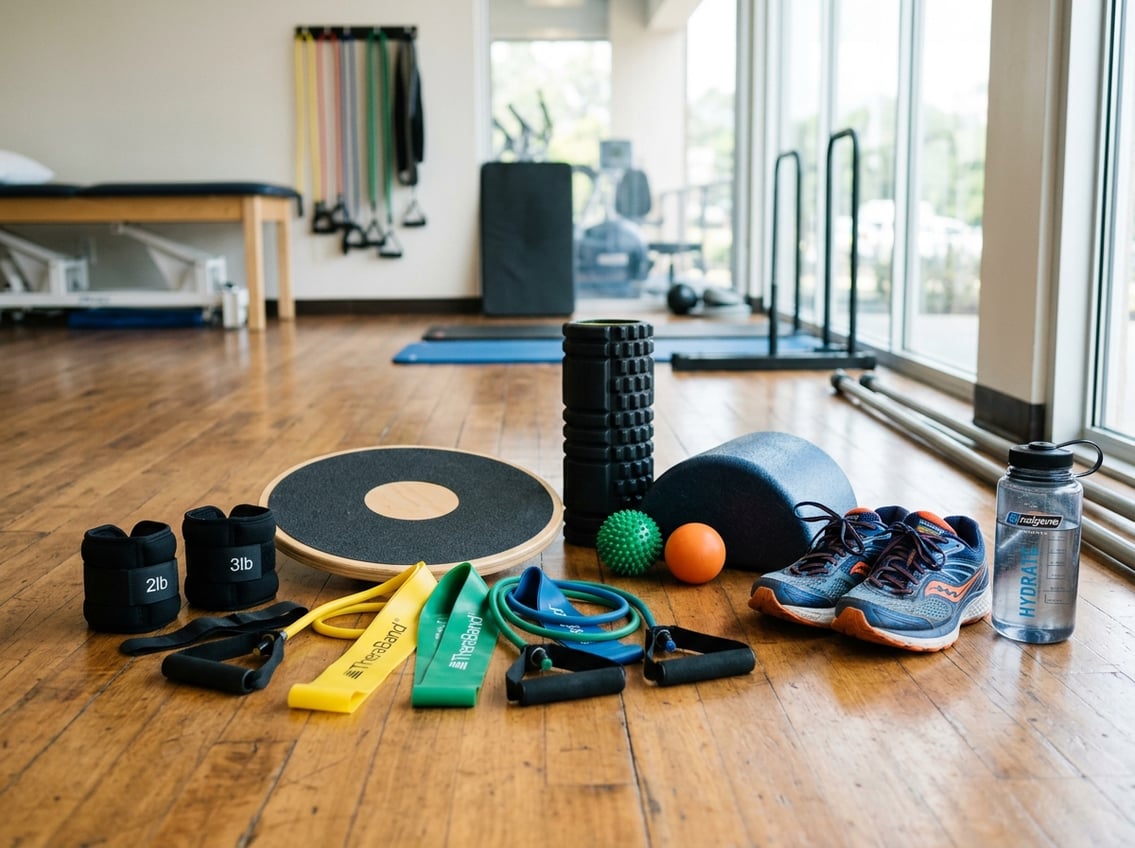
Most athletes train legs. Almost nobody properly trains the ankle complex.
Ankle strength is a game-changer for injury risk, athletic performance, and just moving well day to day.
Your ankles are the base for pretty much everything—walking, running, or going all out in sports—so their stability really matters.
Why weak ankles lead to injuries and poor performance
If your ankles are weak, they can’t handle all the forces that shoot up your legs when you move. Jump, land, or cut fast and your ankles have to keep things in check to avoid rolling or twisting.
When muscles aren’t strong enough, your ligaments end up doing all the heavy lifting. That’s a fast track to sprains, especially the classic lateral sprain that sidelines so many people. And after one sprain? You’re way more likely to do it again if you don’t actually strengthen things up.
Repeated sprains can mess with your ankle’s proprioception—the sense of where your joint is in space. Suddenly, your ankle might give out even during normal stuff or simple sports drills. Instability like that forces you into weird compensations, and next thing you know, your power and efficiency take a hit.
How ankle strength affects balance, stability, and power
Your ankle muscles are constantly making tiny adjustments to keep you upright, especially on uneven ground. The tibialis anterior, peroneals, and calves are always working in the background.
With stronger ankles, you’ll be better at absorbing impact, generating power, and reacting to surprise bumps or shifts in terrain. That’s not just for athletes—anyone can benefit.
Absorb impact forces when landing or running
Generate power for jumps and sprints
Adapt quickly to changes in surface or unexpected movements
Maintain control during single-leg activities
There’s a direct link between ankle strength and things like vertical jump and sprint speed. The push-off phase in running and jumping relies on your plantarflexors, and research keeps showing that boosting ankle strength helps performance and cuts down on re-injury.
The connection between ankle strength, knees, and hips
Your ankles, knees, and hips work together as a team when you move. If your ankles are weak, your knees and hips have to pick up the slack, which isn’t ideal.
Limited ankle dorsiflexion can make your knees cave in during squats or lunges. That awkward knee position isn’t just uncomfortable—it can set you up for ACL issues or kneecap tracking problems. Stronger ankles make it easier to keep everything lined up.
Instability at the ankle can also change how your hips fire and how you balance. When the ankle can’t do its job, your body tries to stabilize from higher up, which can waste energy and overload your knees and hips over time.
Why most training programs ignore the ankle complex
Most people focus on the big muscles—quads, hamstrings, glutes—while the ankles get ignored. Maybe a few calf raises, but that’s usually it, and it’s not enough.
Thing is, your ankles need strength in all directions: up, down, in, and out. Regular gym equipment rarely targets the front or sides of the ankle, and honestly, most folks only think about ankle strength after they get hurt. Not great for prevention.
Plus, ankle exercises look easy and don’t give you the muscle pump you get from upper body work.
So, it’s tempting to skip them, even though they have a huge impact on how you move and how likely you are to get injured.
That’s where the Achilles Ankle Repair designed their entire company's mission—it covers all those neglected angles and makes ankle training actually feel worthwhile.
Why Ankle Injuries and Achilles Pain Keep Happening
Ankle injuries and Achilles pain just keep coming back for so many people.
The real culprits—weakness, instability, and poor recovery—often get overlooked. If you don’t rebuild strength and fix your movement patterns, your ankle stays a weak link.
The most common causes of ankle injuries and instability
Rolling or twisting your ankle stretches or tears the ligaments that hold it steady. Once those ligaments are loose, your ankle’s stability is shot and new problems start piling up.
Weak muscles around the ankle can’t pick up the slack. The peroneals, tibialis anterior, and calves are supposed to keep your ankle from rolling, but if they’re tired or underdeveloped, you’re at risk—no matter how careful you are.
Overuse injuries creep in when you ramp up activity too quickly. Your tendons and ligaments need time to adapt, and if you push too hard, you’ll end up with inflammation or worse.
Poor proprioception is another sneaky one. After an injury, those nerve endings in your ankle just don’t fire as well, so you’re slower to react to uneven ground or sudden shifts.
Why people keep rolling the same ankle repeatedly
After a sprain, those ligaments often heal too loose. They just don’t hold your ankle as tightly as before, so rolling it again becomes way too easy.
Most people bail on rehab as soon as the pain fades. But even if you feel fine, your ankle muscles might still be way weaker than before. That’s not a risk worth taking.
Scar tissue is another issue—it’s less elastic than normal tissue, so your ankle doesn’t move as freely. That can mess with your gait and set you up for more injuries down the line.
Your body tries to protect the injured side, so you start moving differently—maybe without even noticing. Those compensations can cause new problems in the ankle, foot, or even higher up the chain.
What causes Achilles tendonitis and chronic tightness
Your Achilles tendon gets overloaded when you jump into harder training without enough recovery. Tiny tears build up faster than your body can heal them, and over time, the tendon gets thick and cranky.
If your calves are tight, they’re always tugging on the Achilles. That extra tension can trigger pain at the heel or higher up the tendon. It’s a vicious cycle.
Stiff ankles make things worse. If your ankle joint can’t move fully, your Achilles has to work overtime just to get your heel off the ground. That’s a recipe for chronic overuse.
And if you’ve sprained your ankle before, your walking pattern probably changed—even if you didn’t mean to. That new gait can overload the Achilles and nearby tissues, making things even more complicated.
Why stretching alone does not fix ankle problems
Stretching helps with flexibility, but it doesn’t rebuild the strength your ankle needs to stay stable. Ligaments and muscles have to react fast to stop your ankle from rolling, and stretching just doesn’t cut it for that.
Weak tendons need progressive loading—actual resistance—to get stronger. Static stretching won’t make your Achilles more resilient. You need real, load-bearing exercises, like those in the Achilles Elite, to build that strength back up.
Balance and coordination aren’t improved by stretching alone. Your ankle needs to practice making those tiny adjustments, and only targeted balance work can do that.
If you’re dealing with inflammation, sure, rest and gentle movement help. But stretching by itself doesn’t heal the tissue. You need a plan that rebuilds tendon capacity gradually and safely—again, something the Achilles Elite Package is designed to deliver.
Signs You Have Weak Ankles or Poor Ankle Stability
Spotting weak ankles early is huge for preventing nasty injuries. If your ankles feel wobbly or sore during normal stuff, don’t ignore it—it’s usually a sign that stability work is overdue.
Common symptoms of weak ankles and instability
The most obvious red flag is your ankle rolling outward when you walk or exercise. That usually means the muscles and ligaments aren’t keeping your joint in line.
You might also notice:
Sore ankles and feet after standing or walking
Spraining your ankle easily, sometimes from tiny missteps
Trouble balancing on uneven ground
Difficulty keeping ankles straight in heels
That nagging feeling your ankle could give out at any second
Persistent swelling around the joint
Chronic instability hits about 20% of people who’ve had a bad sprain. If you’re constantly anxious about rolling your ankle or skipping activities because of it, that’s a pretty clear sign you need to address it—ideally with something comprehensive like the Achilles Elite Package.
How to test ankle strength and balance at home
Want to check your ankle stability? Try standing on one foot next to a chair and see if you can last 20 seconds without wobbling or grabbing for support.
For a tougher challenge, close your eyes and balance on one foot. If you can’t hold it for at least 10 seconds, your ankles could definitely use some strengthening.
Sit down and draw the alphabet with your toes, keeping your leg still. If that’s hard or painful, weakness could be the culprit. Another quick test: try walking across the room on your heels with your toes lifted. If you feel unsteady or can’t maintain the position, it’s time to work on ankle strength.
Limited ankle mobility vs weak ankles (what's the difference?)
Mobility is about how far your ankle can move, while weakness is about how well your muscles support the joint. These can overlap, but they’re not the same thing.
If you can’t bring your toes up toward your shin (dorsiflexion) or point them down (plantarflexion), that’s a mobility issue. But even with full range, you can still have instability if your muscles can’t control the joint.
On the flip side, strong muscles won’t help much if your ankle is locked up from tight tendons or old injuries. Testing both flexibility and strength helps you figure out if you need more stretching, more strength work, or both. The Achilles Elite Package actually addresses both sides of the equation.
Why your ankles feel tight, unstable, or painful
Old injuries—sprains, fractures, dislocations—are the biggest reason ankles stay unstable or painful. If those ligaments never fully bounce back, you’re left with weakness that just doesn’t go away on its own.
Shoes matter more than people think. Footwear that’s too narrow, flat, or just plain uncomfortable can force your ankles into bad positions, causing muscle imbalances and aches that linger.
Posterior tibial tendon dysfunction is another sneaky one. It makes your ankle roll inward and hurts when you walk, often flattening your arch. Usually, it’s from overuse or a hard impact.
Osteoarthritis wears down the cartilage in your ankle, making it stiff, sore, and less stable. And if you have diabetes, nerve damage can weaken your ankles by messing with muscle coordination and sensation in your feet.
How to Strengthen Ankles Properly (What Actually Works)
Building strong ankles takes real commitment. You need targeted exercises that hit every direction, not just the usual up-and-down stuff, and you’ve got to keep increasing the challenge over time.
A lot of people never get around to proper ankle training because it’s confusing or seems boring. But with something like the Achilles Elite Package, it’s way easier to stay on track and actually see results—without having to guess what to do next.
The best way to strengthen weak ankles step by step
Start with basic exercises that build foundational strength. Go for calf raises first—they hit the muscles above your ankles and give you essential support.
Keep both feet on the ground at first. Focus on slow, controlled movements through your full range of motion.
Once 15-20 reps feel easy, move to single-leg variations. These force your ankle to stabilize on its own, which is a lot like what happens when you walk or jog.
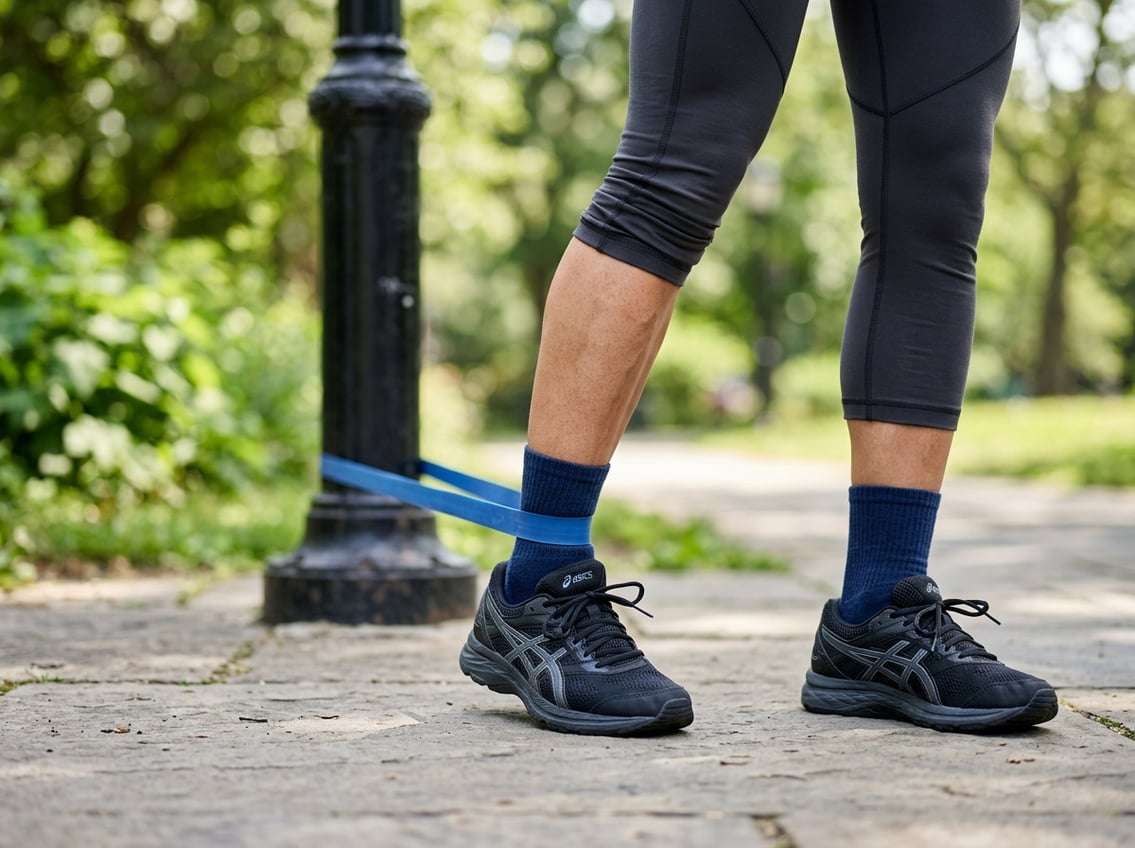
Add ankle inversion and eversion exercises with resistance bands. This targets those crucial muscles on the inside and outside of your ankle joints.
Balance training? Start it right away. Just stand on one leg for 30-60 seconds—no equipment needed, and you can do it while brushing your teeth or waiting for your coffee.
After a couple of weeks of basics, try dynamic moves like reverse lunges and single-leg Romanian deadlifts. These blend strength with real-life movement patterns, getting your ankles ready for whatever your day throws at you.
Your ankles move in four main directions, and you can't really ignore any of them. Plantarflexion is when you point your toes down—classic calf raise territory. Dorsiflexion is pulling your toes up toward your shin, which you train with tibialis raises.
Inversion turns your sole inward, while eversion turns it out. These are big for avoiding those annoying ankle rolls on uneven ground.
Stability training is another beast. It teaches your ankle to hold its position under load, not just move up and down. Balance drills and single-leg squats are your friends here.
How often you should train ankles for results
Hit ankle training 4-6 days a week if you want real progress. These muscles are small and bounce back fast, so daily basics are usually fine.
Mix it up: go heavier with resistance 3-4 times a week, then sprinkle in lighter balance work on the off days. Maybe banded exercises and weighted calf raises on Monday, Wednesday, Friday, and then single-leg balance on the others.
Sessions don't need to drag on—10-15 minutes is plenty. That's enough to get results without burning yourself out or wrecking your form.
Why progressive overload is critical for ankle strength
Your ankles only get stronger if you keep nudging up the challenge. That's where progressive overload comes in—add reps, resistance, or complexity over time.
Start by bumping reps from 10 to 20 per set. Once that's easy, grab some bands or weights instead of just piling on more reps forever. For calf raises, holding dumbbells or wearing a weighted vest works well.
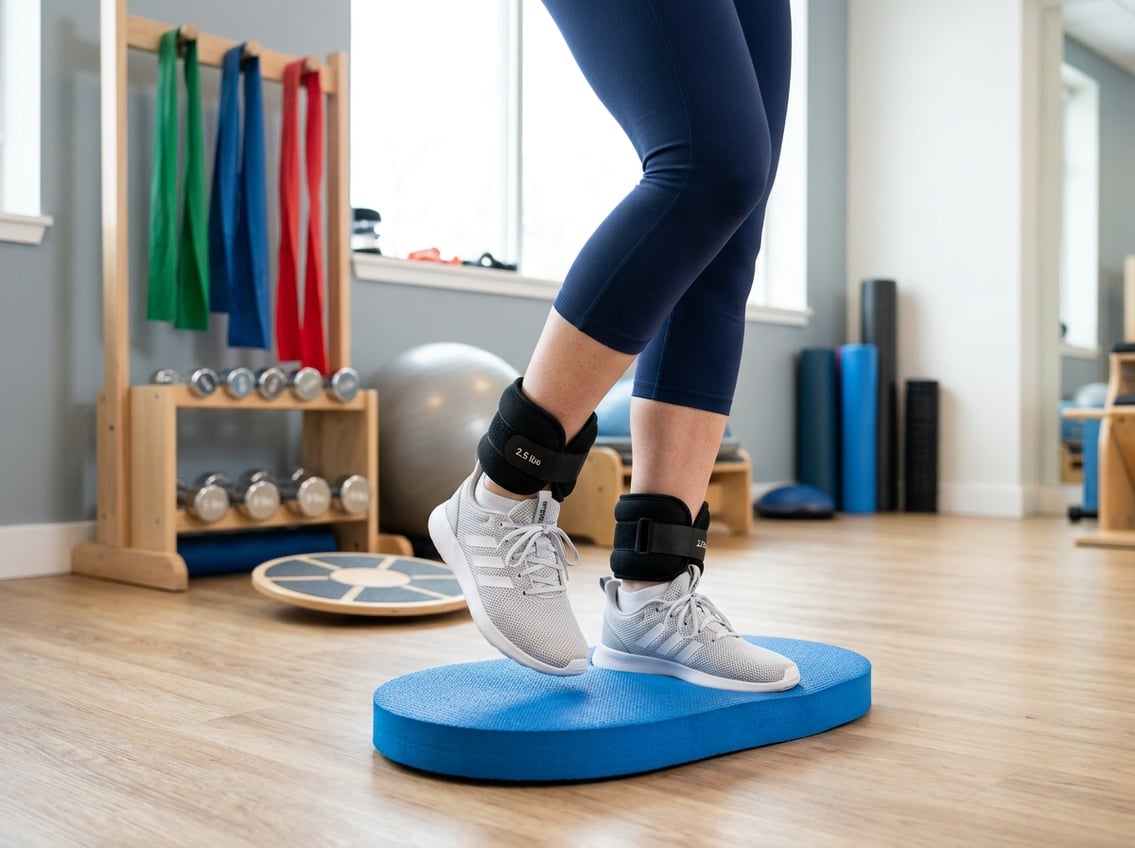
Make things harder by switching from two legs to one, or by adding unstable surfaces. A one-leg calf raise on a step? That's a real test.
Track your progress each week. Try to increase something—reps, sets, resistance—every week or two. Otherwise, you'll plateau after the first month or so, and nobody wants that.
Why Most Ankle Strengthening Exercises Don't Work
A lot of traditional ankle exercises just miss the mark. They often target too small a range of motion, skip key muscles, or never get harder. That's how you end up with ankles that still feel wobbly, even after weeks of effort.
Why resistance bands are limited for ankle strength
Resistance bands are handy, but they're not perfect. The tension is highest at the end of the movement, when your ankle is actually weakest—and at the start, when you're strongest, there's barely any resistance.
This mismatch means your muscles aren't getting the right challenge at the right time. Plus, most band moves only hit 2-3 planes of motion, when your ankle really moves in all sorts of directions during daily life.
Even with heavy bands, you're maxing out at maybe 30-40 pounds of tension. After a while, there's nowhere to go—no way to keep progressing. That's a dealbreaker if you want serious strength gains, which is why the Achilles Elite Package includes more advanced tools.
The problem with bodyweight ankle exercises
Bodyweight moves are fine to start, but the resistance is fixed. As you get stronger, you quickly outgrow them and hit a plateau in just a few weeks.
Plus, your hips and knees end up doing a lot of the work, so your ankles aren't getting as much direct benefit as you think.
Common bodyweight ankle exercises:
Ankle circles
Toe walks
Heel walks
Single-leg balance holds
Towel scrunches
These help with basic control, but they're just not enough to build real strength. You need progressive overload, and that's tough to get without adjustable resistance—something the Achilles Elite Package totally solves.
Why calf raises don't fully train the ankle
Calf raises are great for your gastrocnemius and soleus, but that's just one part of the picture. They ignore the tibialis anterior, peroneals, and those little foot muscles that handle dorsiflexion, inversion, and eversion.
If you only train plantarflexion, you're setting yourself up for muscle imbalances and maybe even more injuries. You need strength in all directions for real stability, which is exactly why the Achilles Elite Package covers every angle.
Most people also do calf raises with a limited range of motion. Your ankle can move way more than that, and sprains usually happen at those end ranges you're not training.
Plus, calf raises don't look much like what your ankle does during sports or even regular walking.
Mobility vs strength (and why you need both)
Mobility lets your ankle move freely, but strength lets you control that movement. You really can't have one without the other.
Some folks stretch obsessively but never train strength in those new ranges. That leads to unstable joints—your ankle can move, but can't handle any force there. On the flip side, if you only train strength in a tiny range, your ankle gets stiff and can't adapt to weird surfaces.
The effective approach includes:
Controlled articular rotations through your whole range
Strength training at different joint angles
Progressive resistance in every direction
Dynamic stability drills mixing mobility and strength
Basically, you want to get more range and more control at the same time. That's what the Achilles Elite Package is built for. Just stretching or just lifting won't cut it.
Types of Ankle Strengthening Equipment (Pros and Cons)
There's a ton of equipment out there for ankle strength, and each one has its quirks. Resistance bands are versatile for rehab, but more specialized tools—like tib bars and slant boards—tackle weak spots that generic gear just can't touch. The Achilles Elite Package brings all these tools together, so you don't have to guess.
Resistance bands for ankle rehab and activation
Bands are portable and cheap, and you can hit pretty much every ankle movement with them. Just swap foot positions or anchor points to change things up.
Pros:
Easy to bring anywhere
Gentle resistance for healing injuries
Good for early-stage strengthening
Fits most physical therapy plans
Cons:
Hard to measure exact resistance
Bands wear out and lose tension
Need a solid anchor or they'll slip
Not enough resistance for serious strength building
Latex bands usually have better stretch, but fabric ones are comfier. You'll need a few levels of resistance as you get stronger—something the Achilles Elite Package takes into account.
Tib bars for anterior lower leg strength
Tib bars are all about the tibialis anterior—the muscle along your shin that handles dorsiflexion. It's a weighted bar that hooks onto your foot, so you can really load up that front-of-leg movement.
This muscle gets ignored way too often. Tib bars fix that by letting you progressively add weight, which is a big plus for runners or anyone prone to shin splints.
Pros:
Hits tibialis anterior directly
Easy to add more weight as you improve
Helps prevent shin splints
Boosts ankle stability for quick direction changes
Cons:
Pretty much single-purpose
Need to buy weight plates separately
Takes a bit to learn proper form
Not for acute injuries
Slant boards for ankle mobility and stretching
Slant boards are simple but effective. They set your foot at an angle, stretching your calves, Achilles, and the ankle joint without much effort on your part.
Standing with toes up and heels down gives a deeper stretch than just using the floor. It's a lifesaver for tight ankles or plantar fasciitis.
Pros:
Easy passive stretching
Adjustable angles for all flexibility levels
Great for regaining mobility after being in a cast or boot
Stable platform—less risk of falling
Cons:
Doesn't build strength
Some angles might not fit everyone
Kinda bulky for a one-trick tool
Can overstretch if you go too steep
Calf raise equipment vs ankle-specific training
Standard calf raise machines focus on pushing up and down—good for calves, but that's about it. They miss out on the sideways and upward movements that really matter for ankle health.
Ankle-specific gear, like wobble boards or resistance setups, trains every direction. That's the only way to get real-world stability, and it's one of the big reasons the Achilles Elite Package is so effective.
Calf raise limitations:
No training for lateral stability
Skips tibialis anterior entirely
Doesn't mimic sports or daily life
Can actually make imbalances worse if that's all you do
For full-on ankle conditioning, you need both calf and ankle-specific equipment. That's the combo the Achilles Elite Package delivers, so you don't have to cobble together a bunch of random gear.
Ankle strengthening machines for controlled resistance
Specialized ankle machines offer adjustable resistance, ideally in multiple directions. They guide your foot through set movement patterns and keep tension steady the whole time.
The achilles elite is a prime example of a piece of equipment designed to train the foot, ankle, and calf structures all at the same time. Clinical-grade machines track your rehab progress with precise resistance measurements.
Pros:
Consistent resistance through the full range of motion
Adjustable settings for different strength levels
Built-in tracking for rehab metrics
Guided movement reduces injury risk
Cons:
More expensive than portable gear
Large size isn’t great for home gyms
Fixed movement paths can feel unnatural
Might be too much for basic ankle maintenance
These machines shine in physical therapy clinics with the space and budget for them. For most people at home, you’ll get similar results with resistance bands or balance boards—but if you're looking for a premium piece of equipment, they are objectively the most effective without question.
Best Ankle Strengthening Equipment for Rehab and Performance
Ankle strengthening equipment runs the gamut from classic resistance bands to specialized machines. The best tools let you adjust resistance, support lots of movement patterns, and work for both rehab and performance.
What to look for in ankle strengthening equipment
Resistance adjustability is key. You want to start light for recovery and ramp up the challenge as you get stronger.
If a piece of equipment only offers fixed resistance, you’ll hit a wall pretty quickly.
Multi-directional movement matters too. Ankles don’t just move up and down—they roll, twist, and flex in all sorts of ways.
If your equipment only works in one plane, you’re missing out on training key muscles and prepping for real-life movement.
Stability is a big deal. You shouldn’t have to wrestle with your equipment to keep it steady or end up working your arms just to hold it in place.
Unstable equipment makes you focus more on balance than actually strengthening your ankle.
Build quality is underrated. Cheap plastic gear wears out fast, especially once you start pushing heavier resistance.
Metal frames and reinforced parts last longer and handle more abuse—something to keep in mind if you’re serious about your training.
Ankle rehab equipment for home use
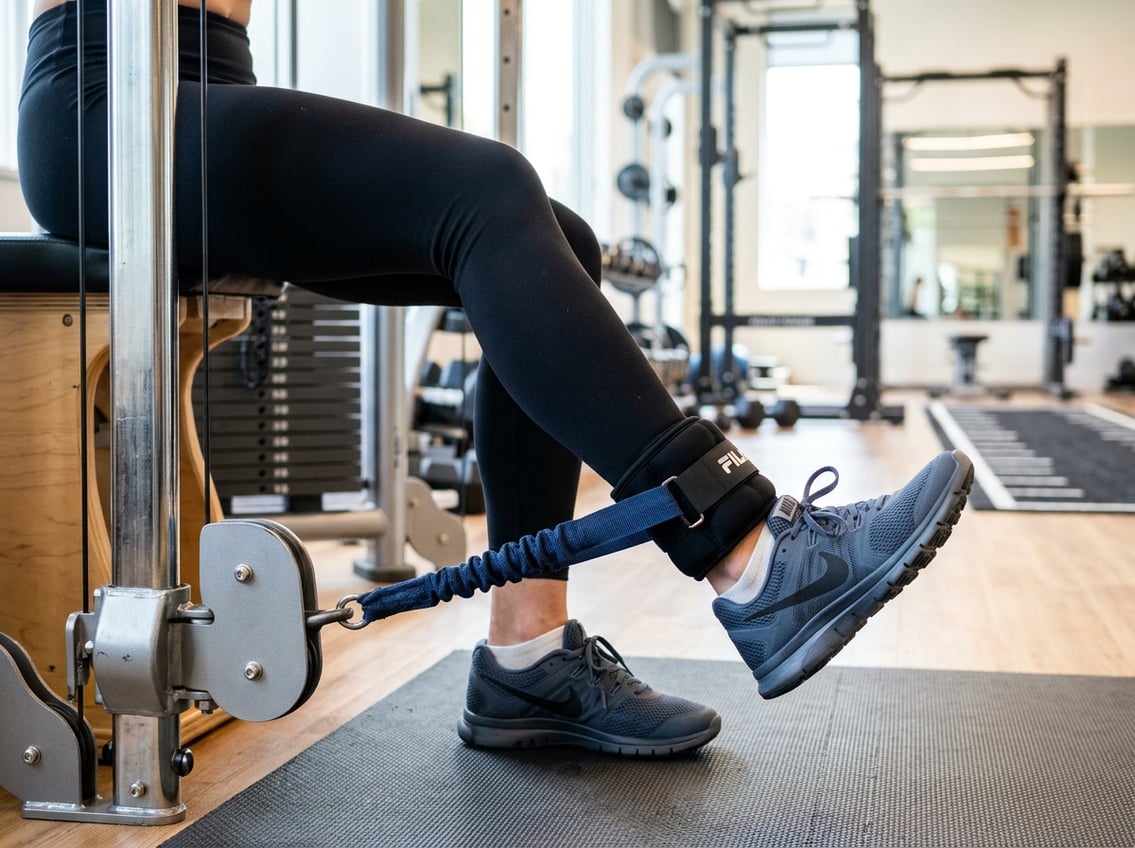
For home rehab, you want something effective but easy to use and store. Resistance bands with ankle attachments are a basic go-to and let you do simple flex and point exercises.
They’re fine for early recovery, but they don’t offer the stability or resistance control you’ll need as you progress.
Home ankle rehab machines are a step up. They usually have adjustable footplates and resistance, so you can work out while seated and dial in the intensity.
This setup keeps things safe and controlled, which is huge when you’re coming back from injury.
Some equipment lets you train both feet at once, saving time and keeping things balanced. Single-foot devices double your workout time and can lead to uneven strength.
Dual-pedal systems are handy for comparing strength between sides or just getting things done faster.
Storage and setup matter more than you’d think. If it’s a pain to assemble or hogs your floor, you’ll probably skip workouts.
Compact, easy-to-store equipment fits real life—and helps you stay consistent.
Ankle strengthening tools for athletes
Athletes need gear that builds real power and can handle serious force. Rehab tools just don’t cut it for sport-level demands.
Good athletic gear can take a beating and mimic the chaos of jumping, cutting, and sudden direction changes.
360-degree resistance is a game-changer. Most exercises just hit one movement, but real sports require your whole lower leg to fire together from every angle.
Equipment that challenges your ankle in all directions builds the kind of strength that actually translates to the field or court.
Progressive overload is non-negotiable. You need to be able to keep cranking up the resistance as you get stronger—otherwise, you’ll plateau.
Machines with multiple resistance settings keep things fresh and challenging for the long haul.
Transitioning from rehab to full-speed training is tricky. The best equipment lets you bridge that gap, handling both gentle recovery work and intense strength sessions.
Versatility means you don’t have to swap out tools every time you level up.
Why dedicated ankle machines are the most effective option
Dedicated ankle machines, like those in the Achilles Elite Package, just offer a level of control you can’t get with bands or bodyweight moves. Bands lose tension as you move, making it tough to track real progress.
Machines keep resistance steady through the whole movement, which is what you want for real gains.
Proper positioning is automatic with these machines. When you’re DIY-ing it, you have to pay constant attention to form—otherwise, you start compensating and missing the target muscles.
Machines guide your foot perfectly, so you can focus on the work, not your alignment.
Training both ankles at once is a big plus. You can spot and fix imbalances, or just get your session done faster.
That efficiency is a lifesaver if you’re short on time but want real results.
Yeah, it’s an investment, but the payoff is huge. Fewer injuries, faster recovery, and honestly, the cost of one bad ankle sprain (doctor bills, lost training, the whole mess) will probably be more than just buying solid equipment like the Achilles Elite Package in the first place.
Ankle stability training for general health and aging
Let’s be real—ankle stability is a big deal as you get older. Weak ankles mean you’re more likely to fall when you step weird or trip over something.
Good strengthening equipment helps your body relearn those quick balance corrections that keep you upright.
Low-impact resistance training is a must for aging joints. Gear that lets you dial in smooth, gentle resistance keeps your ankles getting stronger without pounding your joints.
If you’ve got arthritis or old injuries, this is a game changer.
Tendons and fascia lose their bounce over time, making you more prone to tweaks and strains. Regular work with the right equipment builds resilience and keeps you moving well.
It’s not just about strength—full range-of-motion exercises help you stay flexible, too.
Staying independent as you age? That’s partly about strong, stable ankles. Walking, stairs, just getting around—it all starts down there.
Stick with it, and you’ll keep those abilities a lot longer.
Ankle strengthening for lifters and gym training
Lifters, listen up—your ankles are working way harder than you think. Every squat or deadlift loads your ankles with serious weight.
If your ankles are weak, your whole foundation gets shaky. That limits how much you can lift and ups your injury risk.
Ankle mobility is a hidden factor in squat depth and form. Tight ankles keep you from hitting proper depth, so you end up compensating with your knees or back.
Using something like the Achilles Elite Package to strengthen your ankles through their full range can seriously improve your squat mechanics.
Calf raises aren’t enough. They hit the big calf muscles, but skip all the little stabilizers that really protect your ankle joint.
Comprehensive ankle equipment works the tibialis anterior, peroneals, and all those unsung heroes that calf raises miss.
Warming up your ankles before heavy lifts is smart. A few minutes with ankle strengthening gear wakes up those stabilizers and sharpens your sense of balance.
It’s a small step that can make a big difference in performance and injury prevention.
Ankle rehab equipment for injury recovery
After an injury, you need gear that lets you load your ankle safely and gradually. Generic exercises just can’t offer that kind of precision.
Good rehab equipment lets you increase resistance in small steps, so you can keep progressing without overdoing it and risking another setback.
Achilles tendon injuries, for example, really benefit from machines that isolate eccentric strengthening. There’s solid research behind eccentric training speeding up Achilles recovery.
Ankle Injury Prevention vs Rehab (What Most People Get Wrong)
Most folks only start training their ankles after they get hurt. It’s a backwards approach, honestly.
Prevention and rehab are totally different animals—they need different strategies and lead to very different long-term outcomes.
Why you should train ankles before injury happens
Your ankles take a beating—up to five times your body weight when you run or jump. If you’re not ready, those stabilizers and ligaments can’t keep up, especially with sudden moves or uneven landings.
Prevention training builds up those tissues before anything tears or stretches. It keeps your ligaments tight, your nerves sharp, and your peroneals firing fast enough to stop a roll.
Once you sprain an ankle, those ligaments might never fully bounce back. The sensors that tell your brain where your ankle is get damaged, and that’s tough to fix.
It’s way easier to keep everything working in the first place than to try and rebuild it later.
The difference between rehab training and strength training
Rehab is all about getting back what you lost—dealing with stretched ligaments, swelling, scar tissue, and messed-up nerve signals.
Prevention training, on the other hand, is about building up healthy tissue—chasing strength, power, and endurance before anything goes wrong.
Rehab starts gentle: range-of-motion drills, then bodyweight balance, and only later adding resistance. Prevention can jump right into loaded moves like calf raises, single-leg hops, and tough resistance band work.
How strong ankles reduce long-term injury risk
Strong ankle muscles act like built-in shock absorbers, protecting your ligaments when things go sideways. The peroneals, especially, can snap into action and stop your ankle from rolling if they’re trained well.
Studies show that stronger dorsiflexors and plantarflexors help you land better and absorb force, lowering the stress on your ligaments.
Training also sharpens your ankle’s proprioception—basically, its sense of position in space. Better proprioception means you’re quicker to correct a bad landing or a stumble, often dodging injury altogether.
Why prevention training has the highest ROI
One ankle sprain can sideline you for a month or more, rack up medical bills, and leave you with a high chance of re-injury. Prevention training takes maybe 10-15 minutes, three times a week.
That small investment keeps your training on track, saves you from PT bills, and lets you keep building fitness instead of starting over after every setback.
It also guards against chronic ankle instability, which can turn into a lifelong problem if you’re not careful. Once that sets in, you’re looking at repeat sprains and maybe even surgery—stuff that’s totally avoidable with a little pre-injury work.
Frequently Asked Questions
Strengthening weak ankles comes down to using the right equipment and a smart approach. Resistance bands are super versatile, while balance pads and foam rollers tackle stability head-on.
What is the best ankle strengthening equipment?
Resistance bands with ankle straps are a top pick. They let you hit all the key ankle movements—pointing, flexing, rolling in, rolling out—so every muscle around the joint gets some love.
Balance pads and foam cushions create an unstable surface that makes your stabilizer muscles work overtime. It’s a sneaky way to build real-world strength.
Dumbbells are great for moves like Romanian deadlifts, which work your whole lower leg and ankle chain. A small set (5–25 lbs) gives you plenty of room to grow.
Even simple stuff like picking up marbles with your toes helps. Those tiny foot muscles matter more than you’d think for ankle stability, but most people skip them.
If you want a complete solution, the Achilles Elite Package bundles the best features—adjustable resistance, stability, and versatility—into one system. It’s honestly the easiest way to cover all your bases, whether you’re rehabbing, training for sports, or just trying to stay steady on your feet.
How do you strengthen weak ankles fast?
Consistency beats intensity every time when it comes to fixing weak ankles. If you stick with daily exercises, you’ll usually notice real stability gains in about 6-8 weeks—sometimes sooner, if you’re lucky.
It’s best to mix both strengthening and balance work into each session. For example, try four-way resistance band moves for 5-10 minutes, then spend another 5 minutes on single-leg balance holds.
Start simple with heel raises and basic ankle band stuff before you move on to trickier surfaces. Make sure you can stand on one leg on the floor for at least 15 seconds before you even think about trying it on foam.
If you’ve had a severe sprain, you might need 12 weeks or more of focused work—and sometimes formal physical therapy. Don’t rush it; healing takes time, and honestly, patience is underrated here.
The Achilles Elite Package is designed to guide you through these stages, so you’re not left guessing what to do next.
Do ankle machines actually work?
Sure, ankle machines can target certain muscles, but they just don’t mimic real-life movement. You might get stronger, but it probably won’t translate to better balance or fewer sprains in your day-to-day life.
Resistance bands, like the ones in the Achilles Elite Package, are way more versatile and affordable. You can do isolation work, but also dynamic stuff that actually improves your coordination and balance—something machines just can’t compete with.
Using balance pads or foam surfaces fires up those stabilizer muscles that are usually asleep during machine workouts. That’s the kind of strength you actually use when you’re running, jumping, or just living your life.
Honestly, athletes who stick to functional exercises—like the routines in the Achilles Elite Package—see way fewer ankle sprains than those who rely on machines alone. That’s not just my opinion; it’s backed by real-world results.
What equipment helps Achilles tendonitis?
Resistance bands are a must for controlled eccentric exercises, which are key for healing the Achilles. Eccentric heel drops—where you slowly lower your heel off a step—are especially effective, and they’re a staple in the Achilles Elite Package.
Foam rollers can help loosen up your calf muscles, which takes pressure off your Achilles. Just a couple minutes rolling out the gastrocnemius and soleus every day goes a long way.
A slant board or wedge is great for keeping your foot at the right angle during stretches and strength moves. It’s a small thing, but it makes a noticeable difference if you’re aiming for proper form.
Balance pads add a whole new challenge, forcing your lower leg muscles to work together. That kind of strength takes the load off your Achilles and helps your whole movement pattern improve—which, let’s be honest, is the real goal.
If you want a shortcut to all this equipment and guidance, the Achilles Elite Package bundles everything you need in one place. Why piece it together yourself?
Can you rehab ankle injuries at home?
For mild to moderate ankle sprains, home rehab can actually be pretty effective. Chronic instability? Yeah, you can tackle that at home too, as long as you’ve got the right tools.
You don’t need a fancy gym. Most ankle strengthening can be done with some simple gear that won’t clutter up your living room.
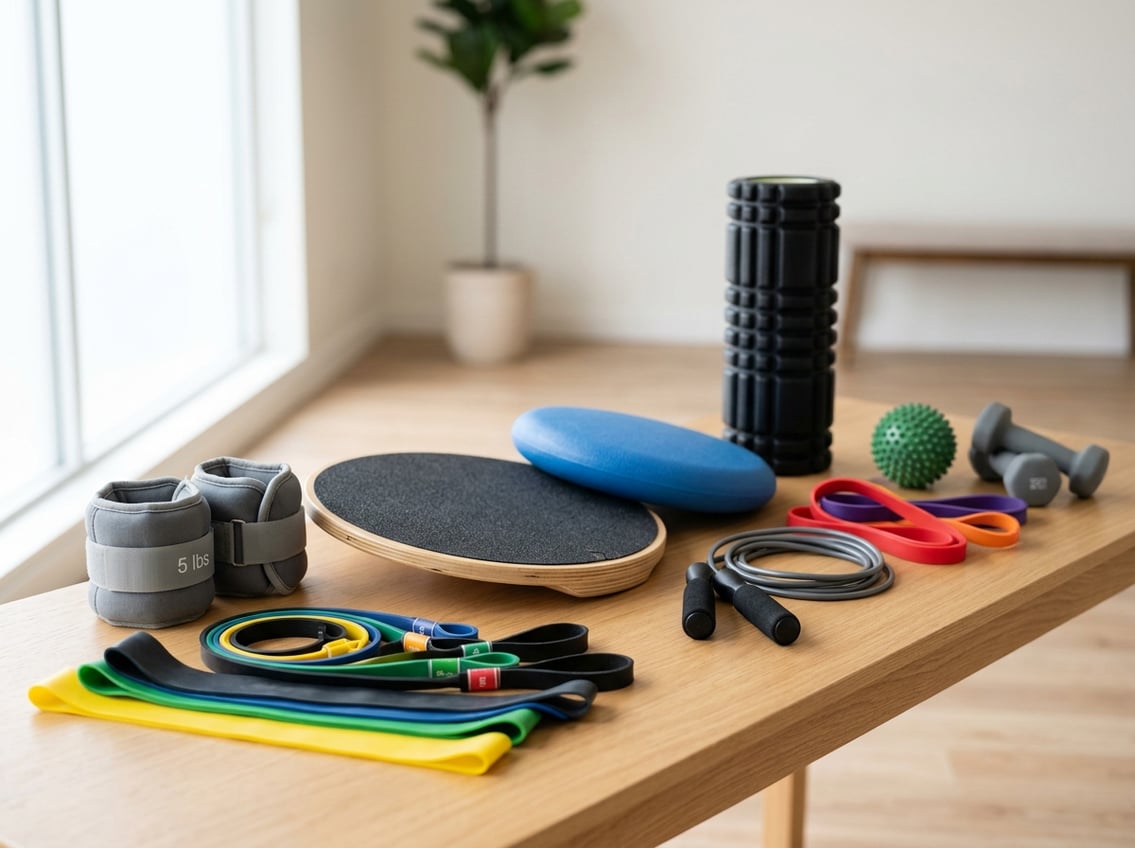
Essential home equipment includes:
Resistance band set with ankle straps
Balance pad or foam cushion
Set of light dumbbells (5-15 pounds)
Marbles or small objects for foot exercises
If you’re dealing with a severe sprain or a fresh injury, though, it’s best to see a pro first. A doctor or physical therapist should check for fractures or anything serious before you dive into home workouts.
Once you’re cleared, the Achilles Elite Package really shines here. It’s designed for that step-by-step progress—start with basic ankle band moves and easy balance drills, then slowly ramp up to foam pads and weights.
Most people see steady gains over 6-8 weeks. Don’t rush it; consistency is what matters.
If you suddenly get sharp pain or your ankle balloons up, just stop. That’s your cue to talk to a professional instead of pushing through at home.
The Achilles Elite Package gives you the structure and gear to make this process way less confusing. Why not make recovery a bit easier on yourself?
Matt Gemkow, the author of this content section at Select Fitness, boasts more than 15 years of fitness experience. He started out in sports and athletic training for many years and has since 2014 transitioned into heavy-weight training and bodybuilding. As a result, he has become one of the most experienced fitness equipment experts out there, and a valuable source of information.